Support Schoolyard Farms

20131119-223418.jpg

Help transform underutilized schoolyards into farms from now until Dec. 6th by donating to Schoolyard Farms’ Indiegogo campaign. Together we can bring back the basics of how to grow food and cook nutritious meals. In turn, we’ll nourish our kids and our communities. Schoolyard Farms is working to create farms from underused schoolyard space to feed cafeterias and educate students about healthy food-systems. Schoolyard Farms has spent the last two years laying the groundwork to make this vision a reality in Milwaukie, Oregon: They have cultivated their first three-quarter acre farm at Candy Lane Elementary, sold thousands of pounds of produce to our community, designed and taught garden-based curriculum to over 300 students, built their community’s support and a board of directors. Now they need our help to grow from a grassroots, volunteer project to a sustainable organization that can expand to other schools and make a profound impact.

Click here to make a donation before Dec. 6th.

Reaching Your Unconscious Consciousness

20131105-185044.jpg

There are four levels of consciousness. Most people never make it out of level one and are condemned to suffer in a self-sabotaged inner world. Here are the four levels of consciousness:

1. Unconscious Unconsciousness
At this stage you are not even aware that you are unconscious. You attract negative things into your life at a rapid pace, as if you have developed a negative ball of energy rolling down hill. Nothing is ever your fault and you are always looking for someone to blame.

2. Conscious Unconsciousness
Here you are aware of your negative thinking and the consequences that it might bring. You might see your negative pattern and have become aware of what it is that you are attracting. You may not like what you are attracting, but you have taken responsibility for it.

3. Conscious Consciousness
You deliberately decide to focus pure and positive thought on something and remove all resistance to its arrival. And, sure enough, it arrives. Your creation might be something as simple as visualizing a parking space opening up for you at the mall. You deliberately intended it, allowed it to come to you and acknowledged it when it arrives.

4. Unconscious Consciousness
When you get to this point, you do not have to work so hard to create things in your life. You are a believer in how the mind game is played and you spend conscious time each day making your mind important. New creations come to you easily and quickly. You have built a positive ball of energy that continues to roll forward in your favor. People call you the “lucky one”.

This consciousness is beyond the body, feelings and thoughts. It is beyond beliefs, attitudes, names, gender, family and social or economic status. It is your inner being. You do not need to search for this Consciousness. It is here, and you are living in it all the time. You only forgot it. You let thoughts rule your life. The sky is always up there. If you don’t see it, this is because of the clouds that cover it. In the same way the clouds of thoughts cover your Consciousness, but by removing them you become aware of it.

Follow on FB/TW @iamEARTHNYC
Thank you for reading!

The Recycled Orchestra: Paraguay

The world generates about a billion tons of garbage a year. Those who live with it and from it are the poor – like the people of Cateura, Paraguay. And here they are transforming it into beauty. Landfill Harmonic follows the orchestra as it takes its inspiring spectacle of trash-into-music around the world. Follow the lives of a garbage picker, a music teacher and a group of children from a Paraguayan slum that out of necessity started creating instruments entirely out of garbage. Landfill Harmonic is a beautiful story about the trans-formative power of music, which also highlights two vital issues of our times: poverty and waste pollution.

Click here to learn more.

Let Your Health Be Your Wealth

20131031-160457.jpg

Your body is naturally equipped with a self-cleaning process. But too much sugar, caffeine, processed foods, stress, and too little exercise can slow the body’s natural detox function to a slow pace. And then your body can’t clean itself when it is put up against the increasing number of harmful and toxic substances in the environment. Toxins come in many forms: pesticides in produce, formaldehyde in carpets and cosmetics, PCBs from plastic containers, dioxins from bleached paper products, and more.

Your body will process and eliminate some of the hordes of chemicals that enter, but overflow gets stored in the liver, lungs, kidneys, fat cells, intestines, blood stream, and skin—which can result in chronic illnesses down the road.

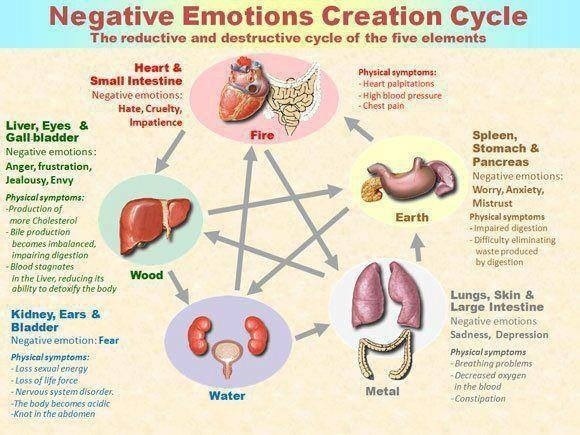
In the Taoist tradition, positive and negative emotions are associated with the internal organs. One of the keys to good health is to become aware of the emotional energies that reside in the organs, and to transform the negative emotional energies into positive virtues. Taoists believe that we are all born with the virtues of love, gentleness, kindness, respect, honesty, fairness, justice, and righteousness.

Unfortunately, as we mature and encounter more stress in our daily lives, negative emotions such as fear, anger, cruelty, impatience, worry, sadness, and grief often predominate. The negative emotions have deleterious effects on the internal organs and glands, draining our life-force and undermining our health.

In the Tao “emotional intelligence” is a process of recognizing emotions by their effects on the body, and employing exercises that transform the negative emotions into positive life force, or Chi. Two important exercises are the “Inner Smile” and the “Six Healing Sounds” techniques, as taught by Master Mantak Chia.

To learn more click here

Swiss Basic Income For Adults

20131007-192058.jpg

Switzerland will hold a vote on whether to introduce a basic income for all adults, in a further sign of growing public activism over pay inequality since the financial crisis.

A grassroots committee is calling for all adults in Switzerland to receive an unconditional income of 2,500 Swiss francs — about $2,800 — per month from the state, with the aim of providing a financial safety net for the population.

Organizers submitted more than the 100,000 signatures needed to call a referendum on Friday and tipped a truckload of 8 million five-cent coins outside the parliament building in Bern, one for each person living in Switzerland.

Under Swiss law, citizens can organize popular initiatives that allow the channeling of public anger into direct political action. The country usually holds several referenda a year.

Urban Homesteading

20131007-183747.jpg

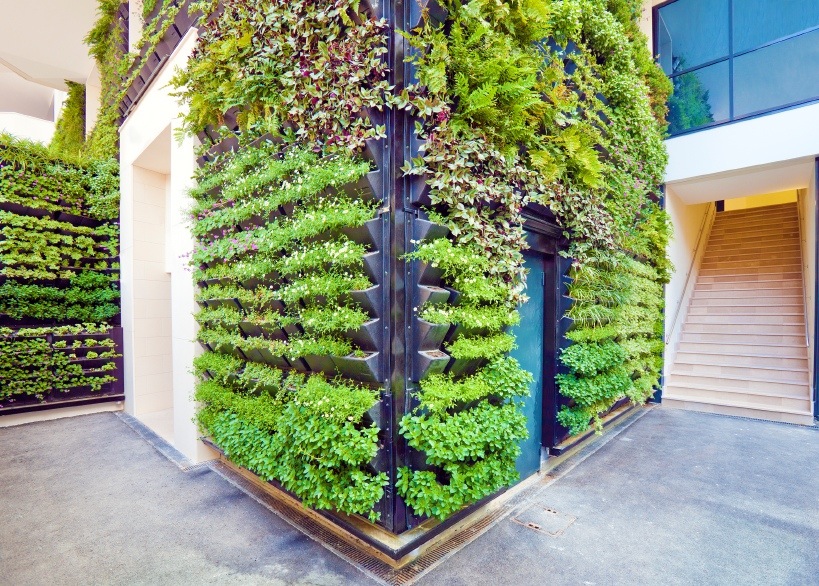
With the increasing concern for our health, and ever-expanding curiosity for what is going into our food, there is a growing trend to eat local, fresh, free-range, and organically fed and/or grown food items. Urban homesteading is a growing trend where individuals with limited space and finances, mix their labor with their land in order to produce and provide for themselves. Some are growing food on balconies, window sills, even vertically to make more use of space.

Campaigns like Grow Food Not Lawns, and Occupy Monsanto, are encouraging individuals to take an active role in their health, and in what they are eating. These activist outlets operate with a general theme, that we should know what we are putting into our mouths and on our tables. By getting more involved in our food choices, we can have a more secure grip on our overall health and wellness.

There are many benefits to growing your own food at home: you save yourself money, increase availability and convenience (you need only travel to your backyard instead of to a supermarket), better tasting food, and safer food that isn’t covered in pesticides and other chemicals.

Increasingly, individuals are finding themselves open minded towards natural treatment methods. It may come to many as a common experience, that doctors mostly treat symptoms of a problem, instead of getting to the root of the problem itself. For example, with illnesses’ that are rooted in chronic inflammation, the doctors don’t generally focus on their patient’s diet, and they don’t consider the foods which are eaten that would contribute to the cause of increased inflammation in the body.

There is continually new research surfacing which supports the blossoming belief that natural items could cure a variety of health impairments. Many already know that cannabis can be an effective cancer treatment, but even grape seed extract has recently been shown to outperform chemotherapy in destroying and inhibiting the growth of colorectal cancer cells. Mainstream medical practices for the treatment of various types of cancer seem to be more deadly than helpful, with common methods like chemotherapy being ineffective 97% of the time. Our bodies have innate healing mechanisms: when we get an infection or when we cure ourselves, but it needs the proper nutrients in order to heal effectively.

Models of Sustainability: Sweden’s Waste-To-Energy Program

Models of Sustainability: Sweden's Waste-To-Energy Program

Due to Sweden’s innovative waste-to-energy program and highly efficient recycling habits, the Scandinavian nation faces an interesting dilemma. They have run out of trash. Sweden’s waste management and recycling programs are second to none as only four percent of the nation’s waste ends up in landfills. By contrast, according to the U.S. Environmental Protection Agency, over half of the waste produced by U.S. households ends up in landfills. Because the Swedish manage waste so effectively and then use what remains to partly power their country, they are now living an environmentalist’s dream; a shortage of garbage.

In order to continue fueling the waste-to-energy factories that provide electricity to a quarter of a million homes and 20 percent of the entire country’s district heating, Sweden is now importing trash from the landfills of other European countries. In fact, those countries are paying Sweden to do so. Countries are paying to get rid of a source of fuel they themselves produced so that Sweden can continue to have the energy output they need. Aside from the economic benefit, Sweden’s system of sustainability clearly has vast environmental benefits. Their waste-to-energy system ensures minimal environmental impact from the country’s waste. Sweden’s extremely efficient circle of consumption, waste management, and energy output provides the current global population and coming generations inspiration and guidance towards a more sustainable future. They represent one ally of many who understand the need to live sustain-ably and who fully commit to doing so.

Four Wheels to Freedom

http://youtu.be/sXvPZPOipnE

Afsana is a female professional driver in Bangladesh trained by BRAC as part of its “Women Steering Forward” program. Despite opposition from family members, Afsana’s husband supported her career path. “For me, it’s like going out for battle in the street every morning, fighting this patriarchal monopoly,” says Afsana, who faces verbal abuse but remains undeterred. “I like the fact that things are changing and the next batch of drivers who are women can work freely in this society.”

Detroit Hospital Builds Organic Greenhouse

20130916-225341.jpg

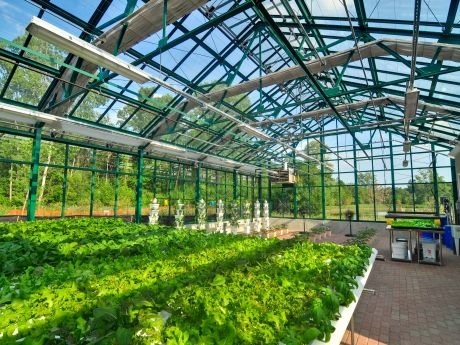
Henry Ford Health System has hired a resident farmer to grow organic produce for patients in its new greenhouse, now open on its 160–acre campus.

The $1 million complex, including an education center was funded entirely by an anonymous donor. The greenhouse will provide clinically based educational programs for a variety of audiences, including children, to make a significant impact on the growing epidemic of obesity.

Michelle Lutz, resident farmer at the hospital, is growing a wide variety of produce in the greenhouse, including tomatoes, lettuce, peppers, eggplant, cucumber, peas, beans, strawberries, Swiss chard, Chinese cabbage, and herbs. With more than 16 years experience, Lutz is the former co-owner of certified organic vegetable Maple Creek Farm in Yale, Michigan, a resource for Henry Ford West Bloomfield since it opened in 2009.

“Our goal is to be a national model for how wellness education can improve health and reduce health care costs by providing people with resources to help them achieve optimal health,” says van Grinsven.

The produce being grown in the greenhouse is projected to reduce food costs at the hospital by more than $20,000 per year, while providing patients with healthy meals. Lutz joined Henry Ford in November, providing input into the type of crops and how they would be grown.

Paying With Plastic: An Idea Worth Sharing

Beijing’s subway authorities have introduced reverse vending machines which allow travelers to offset their transit costs by recycling. Passengers insert a plastic bottle, wait twenty seconds until the bottle is crushed to a third of its original size. Donors then receive one jiao (1.6 cents) on their commuter passes for each empty bottle. The machines have been installed in two stations Jinsong and Shaoyaoju.